
The Paupers’ Graveyard
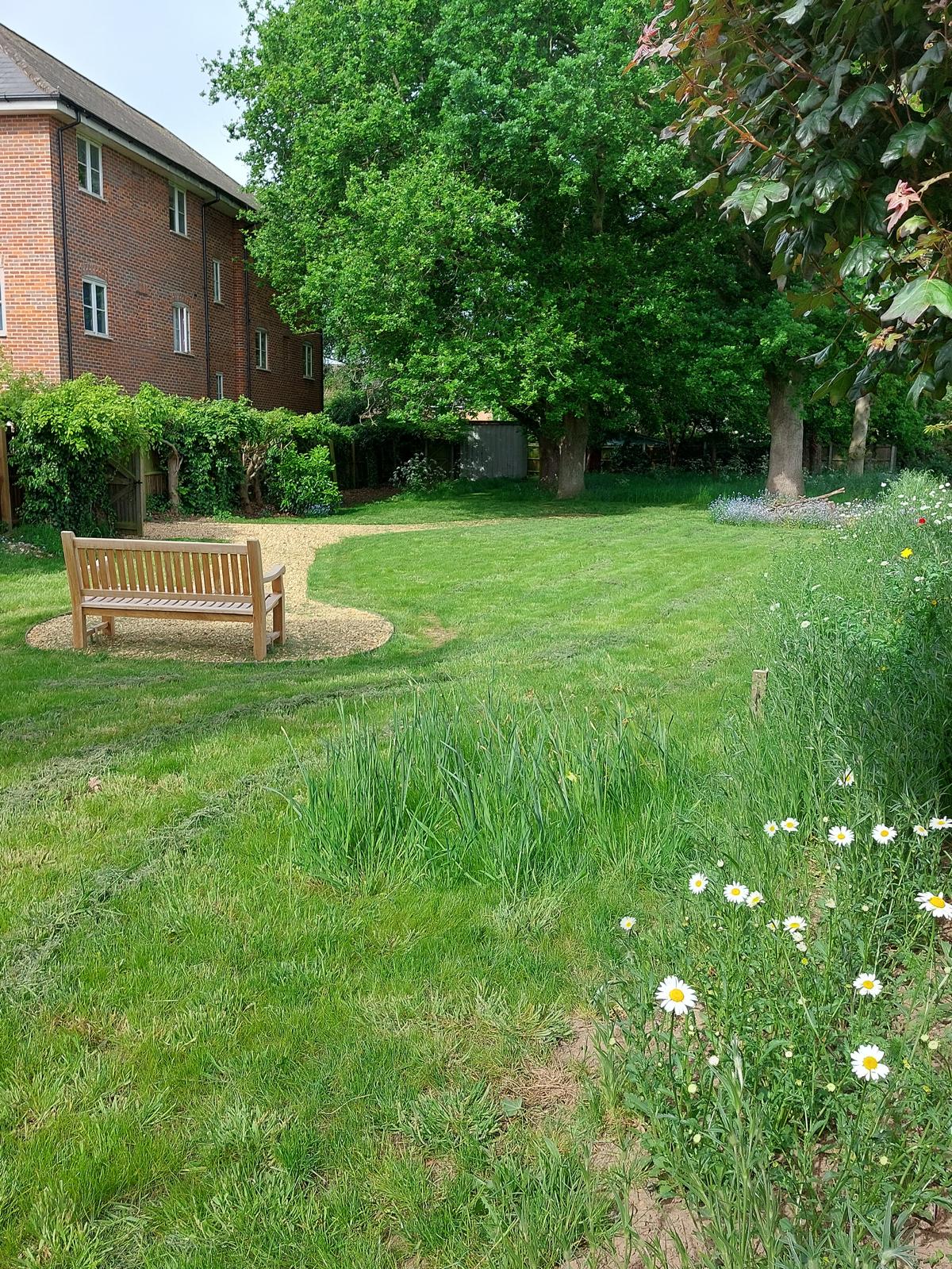
The Paupers’ Graveyard provides a rich site for wildlife and biodiversity by growing plants that have become absent or are declining in the wild like Corncockle and Ragged Robin. You will also find pollen and nectar rich plant for bees, hoverflies, butterflies and moths. Grasses, leaves, and log piles provide places for animals and invertebrates to feed, hide and hibernate. Trees and hedges provide nesting sites for birds and the caterpillars, and seed heads provide food.
Originally the Paupers’ Graveyard formed part of St Michael’s Workhouse, Aylsham, established in 1849. When Aylsham in Bloom volunteers were at last able to access the grave site in 2018, they had to cut their way through brambles and bindweed to enter it. Aylsham Town Council commissioned a tree survey, and work was undertaken to prune and cut out old wood to make the trees safe. The Royal Horticultural Society plus two generous private donations provided funds for plants and seeds. The staff at Woodgate Nursery gave invaluable advice and provided plants.
When deciding what to plant at the grave site, Aylsham in Bloom took several things into consideration to inform their decisions. These included habitat, history, wildlife and biodiversity.
Local habitat is important, putting seeds and plants in an environment they prefer means they have a good chance of thriving and multiplying. For example, one end of the site has trees including some large English Oaks. Here the woodland shade provides opportunities for spring flowers like snowdrops, primroses and bluebells. Some of these had been seen on site in the past but more were added. Autumn flowering Cyclamen hedeifolium, do well in dry shade and have been planted at the bases of the trees. Seeds of wildflowers suited to shade have been sown, like Red Campion and Greater Stitchwort.
The other end of the site is more open, allowing grass to grow. Daffodils and crocus were planted in the grass, and a sunny border was sown with a mix of wildflower seeds, including annual poppy and corncockle, with plug plants of perennial oxeye daisy and knapweed.
The planning was sensitive to the history of the site as a hospital and burial ground. For example, we know that the residents of the Workhouse, as well as growing food plants, likely grew herbs and plants, such as foxgloves, Hedge Woundwort, Feverfew and Chamomile to use as medicines. The Victorian Language of Flowers identifies some of the symbolism which is appropriate to the site as a burial ground. Forget-me-nots for example, stand for true love and memories, alongside Acanthus for immortality and resurrection.
In May/June 2022 a plant survey was conducted by volunteers from the Aylsham Wildlife Society. Over 50 different plants were identified. Many of these plants had historical uses as dyers plants or in herbal medicines. Some of the plants and their traditional uses are listed below.
Important Note: Below are examples of how some plants found on the site have been used in the past. Do not pick, use or eat anything that you see on the trail as some plants are poisonous .
- Field pansy – Was used to treat skin conditions such as Eczema. The flowers can be used in salads.
- Common and tufted vetch – these purple flowered members of the pea family help fix nitrogen in the soil
- Feverfew – Was used to treat migraines and headaches
- Hedge woundwort – Was used to treat cuts and bruises.
- Shepherd’s purse – a member of the mustard family that was used as a pot herb
- Forget-me-not – as its name suggests it symbolises love, fidelity and memory, often included in bridal bouquets
- Nipplewort – was used as a pot herb and as a poultice for cracked nipples
- Red dead-nettle – a common plant that provides an early nectar source for pollinators
- Sow thistle – used as a pot herb, folklore said this plant could help get rid of warts.
- Wood avens or Herb Bennet was used in teas and as an herbal mouthwash
- Scarlet pimpernel – often called the poor man barometer or shepherd’s weather glass, as its flowers only open when the sun shines and will close if it becomes overcast.
- Cornflowers. The folk name Bachelors Button was used because it was said young men wore the flower in their buttonhole to signify, they were single.
- Toadflax – Related to Snapdragons this plant had many herbal uses
- Pot marigold – this useful plant is widely grown as a garden plant and can be used in salads. It is often used as a companion plant attracting helpful insects and discouraging pests. It can be used to make an orange dye for textiles.
- Phacelia – can be used as a green manure plant.
- Sorrel – with its sharp lemony taste it can be used in salads
- Hedge garlic – has a mild garlicky flavour which can be used in salads.
- Green Alkanet – A good nectar source for early pollinators, its thick fleshy roots yield a purple or red dye
- Alexanders – Possibly Introduced by the Romans it can be used as a pot herb, the stems can be candied like Angelica
- Stitchwort – traditional folklore says this plant can cure a running or walking side stitch.
- Sweet Violet – used in perfume and as candied decoration on cakes.
Aylsham Town Council and Aylsham in Bloom continue to monitor and manage this green-space.